Untapped Product Story™: A Practical Guide for R&D
A clear Product Story provides the thread that holds the innovation together. It helps R&D, Marketing and commercial teams understand the user problem being solved, the role the technology plays in solving it and the experience the product is ultimately designed to create. When the Product Story is developed early, products become easier to explain, easier to remember and, importantly, easier for people to act on.
Developing brilliant technology is only half the battle in innovation because, however novel the science or impressive the technical breakthrough, products only create value when people understand why they matter and how they will make life better.
That sounds straightforward, but it becomes increasingly difficult as an innovation project progresses. R&D projects often begin with a clear problem to solve, yet as new technical discoveries emerge, different functions contribute their perspectives and additional opportunities are identified, what started as a focused response to a user need can gradually become a complicated collection of features, facts and potential benefits.
Each of those elements may be valid, but when they are all given equal weight, the original narrative can become difficult to follow. Internally, teams may struggle to agree what the innovation is really about, while externally, consumers are faced with an overwhelming quantity of products, claims and messages across stores, websites and social media. And in a time when consumer attention spans are limited, this creates a significant loss of R&D investment.
A clear Product Story provides the thread that holds the innovation together. It helps R&D, Marketing and commercial teams understand the user problem being solved, the role the technology plays in solving it and the experience the product is ultimately designed to create. When the Product Story is developed early, products become easier to explain, easier to remember and, importantly, easier for people to act on.
Stories vs Concepts
One of the most common mistakes I see is teams trying to write a concept before they have fully developed the Product Story.
It is an understandable temptation because innovation processes are usually structured around stage gates, quantitative testing and the need to demonstrate that an idea is strong enough to progress. Producing a consumer-facing concept can therefore feel like a practical way to move the project forward quickly.
In reality, jumping straight into concept writing rarely saves time because, if the underlying Product Story has not yet been agreed, the concept is too ambiguous. Teams are trying to work out what the product means, which benefits matter most, how the science connects to the user and how the idea should be communicated, all at the same time.
This often leads to repeated rounds of rewriting and rework as the project evolves, with each new technical discovery or commercial perspective reopening questions that could have been resolved much earlier.
The distinction between a Story and a Concept is therefore important.
The Untapped Product Story™ tool focuses on understanding what is going on. It uncovers the logical connection between the user’s unmet need or wish, the reason that need has not yet been fulfilled and the role the innovation plays in changing the outcome.
Typically concept work is concerned with how we tell it. It distils the story into a clear, compelling and consumer-facing expression that can be tested, refined and ultimately used to support communication. When teams develop their Product Story first, concept creation becomes much easier and more commercially impactful because marketing is no longer being asked to invent the meaning of the innovation, while R&D can be more confident that the science is being translated accurately.
The strongest Product Stories are not written with a selling mindset. They are uncovered with an investigative journalist mindset, which means asking questions, challenging assumptions and looking for the thread that connects the user’s world to the product’s enabling magic. Once that thread is clear, the concept becomes a process of distillation rather than invention, reducing unnecessary rework and helping teams move through development with greater confidence and speed.
A single-minded story theme creates useful discipline because it helps R&D and multifunctional teams agree which features genuinely matter to the user’s need today, which benefits support the core commercial opportunity and which possibilities are better reserved for future innovation waves. That clarity also makes it less likely that different functions will introduce conflicting claims or additional benefits that dilute the original story as the project moves towards launch.
Product Story in Practice: see how an R&D team used the Untapped Product Story™ framework to move from breakthrough science to a clearer product direction before concept development.
→ Read the case study
Heroes vs Mentors
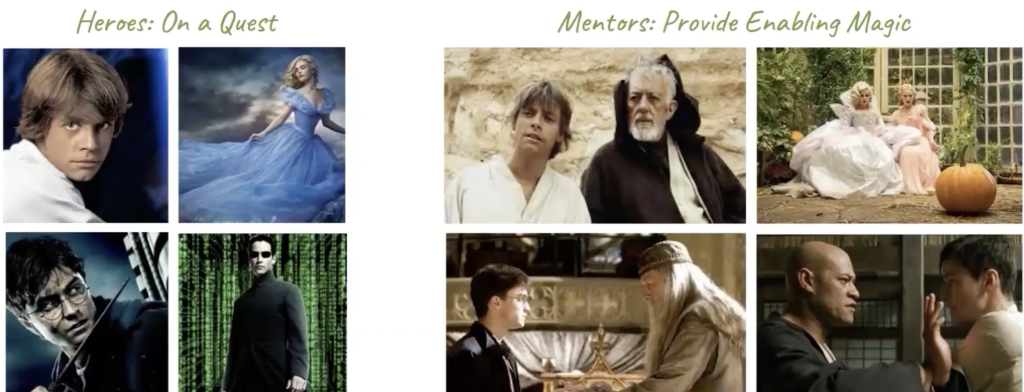
Storytelling works best when the consumer remains the hero and the product takes the role of the mentor. Too often, innovation teams become so enthusiastic about the product that the technology gradually takes over the story. The science, mechanisms, features and supporting evidence occupy most of the narrative, while the person whose life the innovation is meant to improve is given very little space.
This imbalance is understandable because R&D teams have often spent years developing the technology and naturally want to explain what makes it distinctive. However, users are rarely interested in technical novelty in isolation. They become interested when they can see how that novelty helps them overcome a frustration, fulfil a wish or achieve an outcome that was previously difficult or impossible.
One of the simplest ways to test whether a Product Story is working is therefore to ask who occupies most of the narrative. If the product is doing most of the talking, there is a good chance the balance is wrong.
The user must be the hero because the story begins with their world, their unmet need and the future they are trying to reach. The product must be the mentor because it provides the enabling magic that helps them get there.
The role of the innovation is not to steal the stage, but to make the transformation possible.
This means asking: What does the user really want? What frustrates them today? Why has that wish not yet been fulfilled? What is preventing them from achieving the outcome they want? How does the product help them move towards a better future?
Keeping those questions at the centre of the work makes it easier for technical teams to determine which parts of the science belong in the story and which details, although important in development, do not need to dominate the consumer narrative. The Product Story tool centralises this principle by treating the user as the start and end of the story, while positioning the product or technology as the enabling mentor.
The Untapped Product Story™ Arc
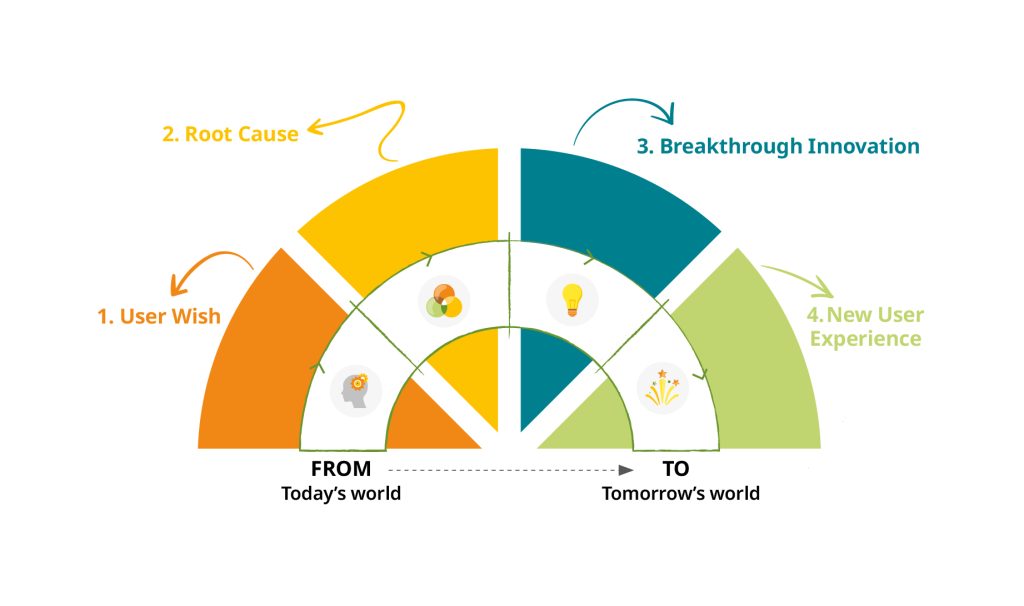
The Untapped Product Story™ Arc follows a classic transformation story inspired by the Hero’s Journey, but rather than beginning with the technology, it begins with people and keeps the team anchored in a real human need throughout development.
This is important because innovation teams can easily become focused on what a product contains or how it works, particularly when the technology is complex or technically exciting. The Story Arc creates a structure that continually brings the conversation back to what the innovation changes for the user.
Developing the Product Story early, with the user clearly positioned as the hero and the product magic directly connected to a specific pain point, helps teams articulate the user journey more clearly and align around the values the innovation is intended to deliver.
For senior R&D leaders, that alignment supports faster decision-making and reduces the risk of projects becoming overloaded with features that do not strengthen the commercial opportunity. For practitioners, it provides a practical way to organise complex technical information, explain the work to colleagues and make clearer choices about what should be prioritised.
It also gives R&D and Marketing a shared language, making it easier to translate technical discoveries into stories that resonate with users and can later be amplified through concepts, claims, demonstrations, packaging and communication.
1. Consumer Wish
The first stage is to understand what the user wants to achieve, rather than beginning with what the product does.
Who are they? What are they trying to do? What frustrates them in the current experience? What do they wish were easier, better or possible?
This stage needs to go beyond a broad functional need because the strongest Product Stories are rooted in a tension that matters in real life. The clearer and deeper the wish, the easier it becomes to judge whether the innovation is genuinely helping to fulfil it. Starting here also helps prevent teams from developing technically elegant solutions to problems that users do not consider important enough to change their behaviour.
2. Root Cause
The next stage is to understand why the wish remains unfulfilled.
What is missing from the world today? What barrier, limitation or compromise stands between the user and the experience they want? Why have existing products or solutions not resolved the problem?
Exploring the root cause is important because innovations that address only the visible symptom may produce an incremental improvement without creating a meaningful difference for the user. By understanding what is really preventing the desired outcome, teams can focus their technical work more effectively and make stronger decisions about where innovation effort will create the greatest value.
3. Breakthrough Innovation
Only once the user wish and root cause are clear should the story move to the breakthrough innovation.
At this stage, the question is not simply, “What technology have we developed?” but, “What does this new product do differently that directly addresses the barrier we have identified?”
This distinction is critical because most innovation projects contain more technical detail than the story needs. A product may include 23 exciting new features, mechanisms or capabilities, but only those that meaningfully solve the user’s unmet need belong in the central Product Story arc. This can be difficult for R&D teams because every element may represent considerable work and technical achievement, but including everything does not necessarily make the story stronger. In many cases, it makes the value of the breakthrough harder to understand.
Selecting only the product mechanisms that supports the core narrative creates greater clarity, makes communication easier and helps multifunctional teams remain focused on the parts of the innovation most likely to create commercial impact.
4. New User Experience
The final stage is to describe what becomes different for the user.
What can they now do that they could not do before? What becomes easier, faster, more enjoyable or more effective? What does their “happily ever after” look and feel like in everyday life?
This future state is what gives the technical detail meaning because it translates the innovation from something the product contains into something the user experiences. It also provides a useful anchor for later decisions about claims, demonstrations and communication. When teams can clearly describe the new user experience, they are better placed to determine what needs to be proven, which benefits should be prioritised and how the innovation should ultimately show up in market.
Untapped Product Story™ Arc
See it in action: how a manufacturing capability was transformed into a customer-centred Untapped Product Story™ that sales teams could confidently communicate.
→ Read the case study
The 75/25 Rule
One of the simplest ways to prevent technology from dominating the Product Story is to apply the 75/25 Rule.
No more than 25% of the story should focus on the new product, while the remaining 75% should be devoted to the User Wish, the Root Cause and the New User Experience.
This does not diminish the importance of the science. It makes the science more meaningful by placing it in the context of the problem it solves and the relevant change it enables.
When too much of the story “airtime” is spent explaining the technology, teams risk losing the emotional and practical connection with the user. The innovation may sound technically impressive, but the reader is left to work out for themselves why it’s relevant.
By contrast, when most of the story is rooted in the user’s world, people can recognise the frustration, understand the barrier and imagine the better future the product makes possible. This creates greater rapport and relatability, but it also has a practical value for R&D because a vivid view of the future experience can guide better product decisions during development. It can help teams identify which technical capabilities are essential, which evidence will support the strongest claims and where future innovation opportunities may exist.
Users need to see themselves in the story before they are likely to care about the solution, which is why the product should remain the enabler rather than becoming the main character.
Summary
Stories become springboards for innovations that succeed in the real world because they connect the technical achievement to a user outcome that people can understand, remember and value.
Internally inside organisations, a focused Untapped Product Story™ gives R&D, Marketing and leadership a shared view of the opportunity, helping teams make decisions more quickly, reduce unnecessary concept rework and remain aligned as the product develops.
Externally, it creates a consistent foundation for concepts, claims, demonstrations, packaging and communication, ensuring that each expression of the innovation reinforces the same central idea rather than introducing competing messages.
A strong Untapped Product Story™ always begins with a clear user tension: a specific need, wish or frustration that matters in people’s lives. It then uncovers the reason that tension exists, identifies the relevant product magic and ends with a clear picture of the new user experience.
The most successful stories remain true to one central idea, even as the innovation evolves to reach new audiences or address adjacent opportunities. That single-mindedness makes it easier for technical and commercial teams to work together, gives consumers a clearer reason to care and helps innovations move towards market with greater focus and momentum.
From Product Story to Activation: see how a single Product Story informed influencer demonstrations, product claims and communication for a beauty innovation.
→ Read the case study
Top Tips for Better Product Stories
1. Start with the user, not the product.
Begin by understanding the user’s frustrations, wishes and emotional drivers, and keep the story rooted in their real experience rather than allowing features or technical mechanisms to become the starting point.
2. Stay single-minded.
Choose one clear story theme and resist the temptation to include every single feature, benefit or technical possibility, because the clearer the narrative, the easier it will be for teams to align around it and for users to remember it.
3. Follow the 75/25 Rule.
Spend no more than 25% of the story talking about the new product, while giving the remaining 75% to the User Wish, the Root Cause and the New User Experience.
4. Write early, not late.
Do not wait until the product is finished before developing the story, because creating it during the earliest stages of innovation can guide subsequent technical choices, support better decision-making and technical support strategies, and prevent avoidable rework later.
5. Use human language.
Avoid jargon and explain the innovation as though you were describing it to an intelligent friend outside your technical discipline, because language that is easy to understand is also easier to share across the organisation.
6. End with the new user experience.
Always finish with a vivid picture of how the user’s life becomes better, easier or more effective, because that is what gives the technology relevance and meaning.
7. Look for cultural codes.
Pay attention to emerging behaviours, expectations and cultural shifts, because Product Stories that are grounded in people’s changing lives are more likely to remain relevant and “future-proof” as the innovation moves towards market.