What a Room Full of R&D Leaders Reinforced About the Future of Innovation
There was enormous warmth in the room, and it was very special to see established colleagues reconnecting while new relationships were being formed. Alongside the celebration, however, there was also a serious and important conversation taking place about the future of R&D. Listening to our keynote speakers, expert panel and the conversations that continued throughout the evening, six themes stood out.
When we brought clients, partners, colleagues and friends from across the FMCG R&D community together to celebrate the launch of Untapping Innovation, we expected an evening of interesting conversations. What we perhaps underestimated was how clearly those conversations would reflect the challenges facing R&D leaders across categories.
There was enormous warmth in the room, and it was very special to see established colleagues reconnecting while new relationships were being formed. Alongside the celebration, however, there was also a serious and important conversation taking place about the future of R&D.
The pressures on R&D teams are increasing. Leaders are being asked to accelerate pipelines, respond to emerging technologies, navigate sustainability and regulatory requirements, improve productivity and deliver more successful innovation, often without additional time or resource. At the same time, the scientific rigour that underpins product quality, safety and performance cannot be compressed to fit a shorter timeline.
Experienced R&D leaders understand this tension very well, moving quickly is important, but moving quickly in the wrong direction does not create speed. It creates rework, late-stage correction and investment in products that are not sufficiently grounded in what consumers actually need.
So how can organisations increase pace without weakening the evidence behind important product decisions? The answer is not to remove rigour, but to make it easier for teams to reach the right answer earlier. That means using clear methodologies and building consumer understanding into the brief before development begins.
Listening to our keynote speakers, expert panel and the conversations that continued throughout the evening, six themes stood out.

1. Speed without clarity creates rework
Innovators are constantly responding to changing markets, evolving consumer expectations and new competitive pressures. Sustainable speed, however, comes from reducing ambiguity. When a brief arrives with significant commercial ambition but without a clear definition of the consumer, the need being addressed or the product experience required, R&D is being asked to begin development before the problem has been properly framed. The team may move quickly, but the missing understanding has not disappeared. It tends to surface later, when changing direction is considerably more expensive.
Market and category data can indicate where an opportunity may exist, but they do not necessarily tell an R&D team what a product needs to do, how it needs to perform or what will make it meaningfully better for a specific group of people. The strongest innovation teams make those questions explicit early. They understand who their target consumer is, and equally importantly, who it is not. They build evidence before significant technical and commercial choices become difficult to reverse, and they test little and often while there is still time to act on what they learn.
For R&D leaders under pressure to deliver more quickly, this is an important distinction. The question is not how much research can be removed but, it is how the right evidence can be generated efficiently, at the point when it has the greatest influence on the outcome.
2. Consumer understanding must move upstream
R&D teams now have more opportunities to stay close to the people they innovate for. Agile research platforms can involve consumers earlier and more frequently. Online communities can reveal how products are discussed and used outside formal research settings. Observation can expose needs, frustrations and behaviours that consumers may never articulate in response to a direct question. The challenge is to bring these sources together in a way that strengthens decision-making. It’s not enough to know what consumers need, R&D teams need to be clear about how those needs connect to the product experience they are creating, and what the product must deliver as a result.
One of the challenges we see in innovation teams is that everyone can be working towards the same ambition, but approaching it from a different perspective. R&D understands the science, Marketing understands the commercial opportunity, and Insights understands the consumer. The real value comes when these perspectives connect around one clear story of what the innovation will change for the user.
Successful consumer-led innovation is built when consumer understanding becomes a shared organisational asset: marketing may use it to develop positioning and communication, insight teams may use it to understand the size and shape of the opportunity, R&D needs it to define the product requirements, usage context and experience that will make the proposition credible. When functions work from different assumptions about the consumer, friction is almost inevitable. When they share a clear and specific understanding from the beginning, the brief, the product science and the commercial ambition can point in the same direction.
This is where having a shared Product Story becomes particularly valuable. It gives R&D and commercial teams a way to connect consumer needs with the product benefits and experience they are trying to create, so that everyone is working towards the same outcome.
Our Untapped Product Story™ tool is designed to support this thinking, helping teams bring greater clarity to the decisions that shape product development.
For a deeper look at how this works in practice, explore our guide to Untapped Product Story™ for R&D, including how to connect the user’s wish, the root cause of their frustration, the technical breakthrough and the new experience the product makes possible.

3. Collaboration is an innovation capability
Florence Adepoju made a deliberate call for greater collaboration between small and large R&D teams, recognising that many of the challenges facing our industries are bigger than any one organisation can solve alone. Innovation does not happen within neat organisational boundaries. The knowledge, technology and capability required to address complex consumer and societal needs are increasingly distributed across businesses, start-ups, academic institutions, suppliers and specialist partners.
For larger organisations, collaboration can provide access to emerging capabilities that may be difficult to develop internally at sufficient pace. For smaller businesses, early support and access from established organisations can have a profound effect on their ability to test, learn and scale. The same principle applies internally. The best innovation teams treat product development as a team sport. They bring consumer, technical and commercial perspectives together while the direction can still be shaped, rather than asking each function to solve its part of the problem in isolation. This does not mean involving everyone in every decision. It means making sure the right knowledge is available when the decision is being made.
4. The scientific method belongs at the heart of innovation
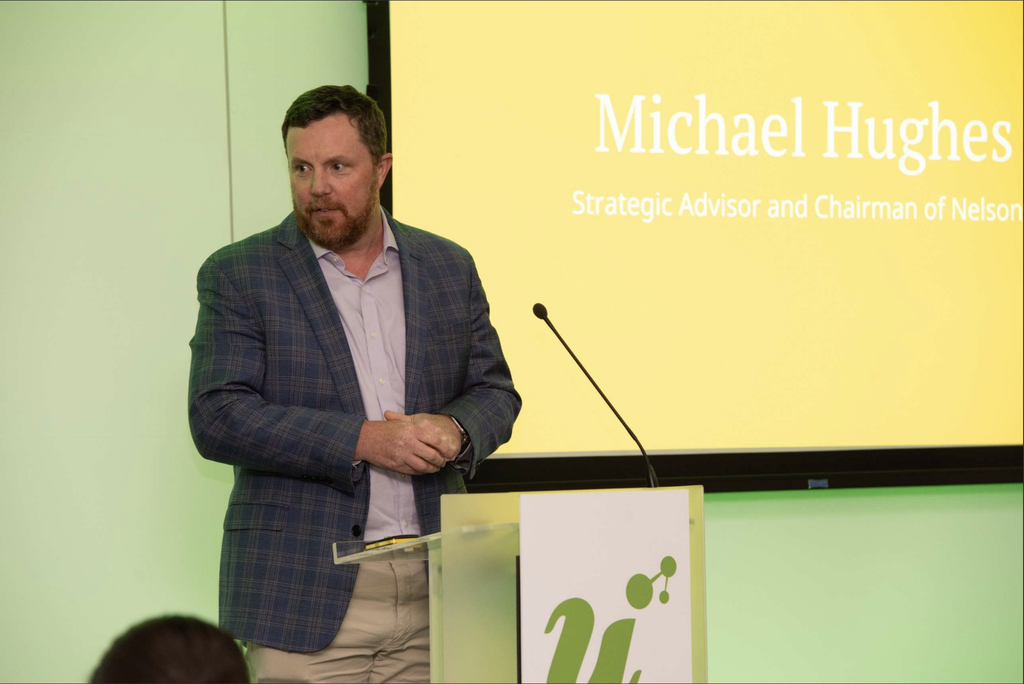
Tamar Kasriel made a compelling case for the scientific method as a route through uncertainty. It was a particularly resonant message for an audience of scientists, researchers and product developers because this is not a new capability R&D teams need to acquire. It is a muscle they already possess. R&D professionals know how to form a hypothesis, identify what needs to be learned, design an appropriate test, interpret evidence and adjust the next action accordingly. They understand that an early answer may be incomplete and that confidence is built through a sequence of well-designed experiments.
The opportunity is to apply that discipline more broadly across innovation.
Too many teams still wait for an idea or product to feel sufficiently complete before exposing it to consumers. This can create a false sense of progress. Considerable work may have been completed, but the team has not necessarily reduced the most important uncertainties around whether the product solves a meaningful problem or delivers an experience people value.
A more scientific innovation process identifies the most consequential assumptions early and tests them while there are still multiple routes forward. It does not require a perfect prototype or a large research programme at every stage. It requires clarity about what the team needs to learn and what evidence would be strong enough to inform the next decision.
5. Good leadership protects focus, not just delivery
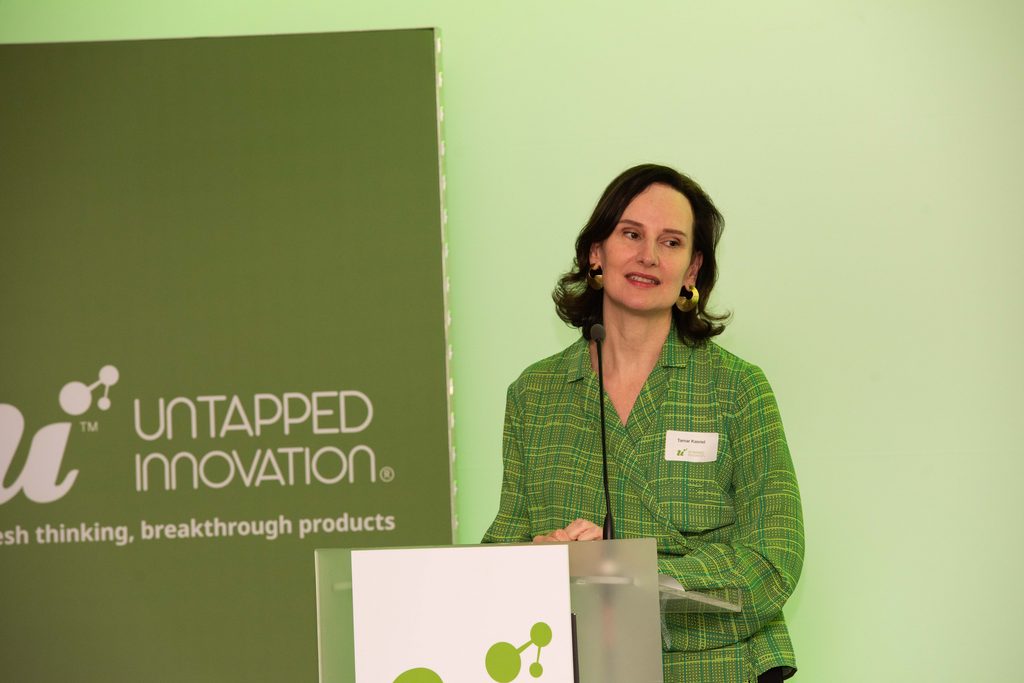
Michael Hughes shared his thoughtful “airplane” approach to management, learned from observing the principles of aircraft design: if something is added, something of equal or greater weight must be removed. It was a beautifully simple idea with significant implications for R&D leadership.
Innovation teams are frequently asked to absorb new priorities, tools, reporting requirements, technologies and projects. Each addition may be reasonable on its own. Collectively, they can create an environment in which people are expected to deliver increasingly complex work without the time or cognitive space needed to do it well.
Capability is not built by continually adding more activity. Sometimes it is built by removing unnecessary work, simplifying decision routes and being clearer about what matters most.
Commercial pressure can make it tempting to keep every project moving and every opportunity open. Yet an overloaded pipeline rarely produces the hoped-for acceleration. It divides attention, delays learning and leaves less time to generate evidence.
Protecting rigour does not mean insisting on the longest process in every situation. It means understanding which activities are essential to confidence, which can be adapted and which no longer add enough value to justify their weight.
6. Sustainability will shape what reaches the market
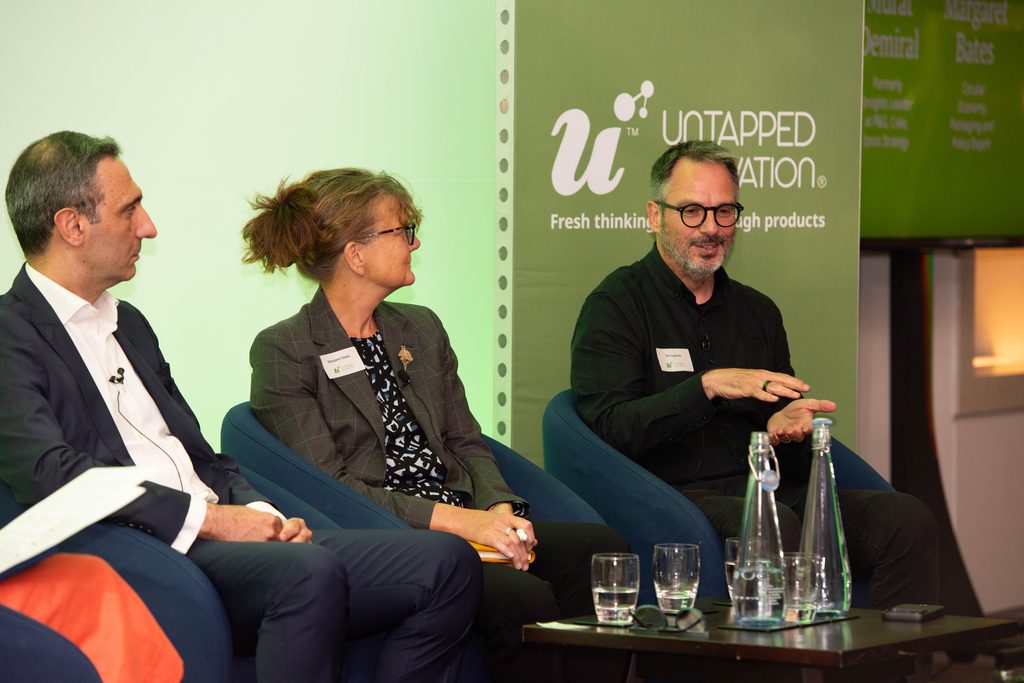
Our panel with Murat Demiral, Margaret Bates and Tim Ingmire also explored the growing influence of sustainability requirements, particularly across packaging and supply chains. The important shift is that sustainability can no longer be treated as a separate workstream or a desirable addition once the core proposition has been developed. Increasingly, it will determine whether an innovation is viable, scalable and able to access the market at all.
When environmental, social, regulatory and financial considerations are introduced late, they can force significant redesign and compromise. When they are included in the early definition of the opportunity, they become part of the innovation challenge and can guide more resilient choices.
For R&D teams, this requires greater awareness of the wider system around the product. Materials, sourcing, manufacturing, packaging, consumer behaviour and end-of-life considerations are interconnected. Optimising one part without understanding the consequences elsewhere may solve one problem while creating another.
Few individual teams will hold all the expertise required, which makes the right partnerships and a shared evidence base increasingly important.
The future will belong to evidence-led R&D teams
Our evening celebrating R&D was a very special opportunity to mark the publication of Untapping Innovation. We are enormously grateful to everyone who joined us, to the speakers and panellists who shared their experience so generously, and to the team who made the evening possible. But the evening also gave R&D professionals something that remains surprisingly rare: the chance to step outside the immediate demands of projects and pipelines and talk honestly about the future of their work.
Senior R&D roles can be isolating. Leaders are balancing technical integrity, commercial ambition and responsibility for teams that are often being asked to do more with less. There are relatively few spaces in which they can explore those pressures with peers who understand them from the inside. The conversations during the evening suggested there is a real appetite for more of that exchange.
We set out to celebrate the launch of a book, but left with a renewed appreciation for the value of bringing the R&D community together. Not only to discuss the technologies and trends shaping the future, but to strengthen the shared practice behind successful innovation.
The clearest message from the room was that the future of R&D will not be secured by speed, technology or process alone. It will be shaped by evidence-led teams that understand the people they are innovating for, make important decisions early enough to influence the outcome, and recognise that the challenges ahead will be better solved together.
Put these ideas to work with your R&D team
The challenge isn’t always knowing what good innovation looks like. It’s having the right tools to make it happen consistently, across projects and teams.
That’s why we’ve created the Innovation Gym®, bringing together eight practical R&D tools designed to help teams apply proven approaches to their own innovation challenges.
From uncovering deeper consumer insights to shaping stronger product stories, concepts and claims, the tools are designed to help your team bring greater clarity and confidence to everyday product development.
Our Untapped Product Story™ tool is one of those available to explore, with a guided framework your team can apply to a live innovation project.
Explore the Innovation Gym® and discover how your team can put these tools into practice.