How to reformulate without losing customers, protecting brand and margin
Reformulation can feel frustratingly inefficient, with functional teams pulling in different directions, costly iterations, and uncertainty around what really matters to consumers. Untapped’s Ideal Product Model Blueprint addresses this by giving R&D a clear, evidence-based framework to focus on what must be protected, where costs can be reduced, and how to avoid later rework. By connecting consumer jobs to sensory attributes, product mechanisms, and validation methods, it enables faster, more confident reformulation that protects both margin and brand equity.
There is a particular kind of dread that settles over an R&D team when a reformulation requirement becomes clear. Everyone in the room knows how the current product is made, how much it is worth to the business and what consumers love about it. And yet, reformulation is an everyday fact of life in fmcg businesses, due to cost pressures or regulatory requirements. Without a shared framework for translating that collective knowledge into highly specific technical priorities, even the most experienced and committed teams can find themselves pulling in different directions, with the consumer’s actual experience becoming cloudy as stage-gates progress and time frames are compressed.
Scientists, formulators, sensory specialists, and packaging engineers navigating reformulation in beauty care, food and beverage, and consumer healthcare are deeply skilled professionals who care enormously about the products they make. Yet the absence of tools and frameworks to consistently connect deep technical expertise to deeply understood consumer needs, is a gap with very real commercial consequences.
Research consistently shows that rework accounts for between 30-50% of all project activity in product development, with reworked formulations and technical solutions costing around 2.5 times more than getting the direction right from the start. 90% percent of engineering leaders report that their organisations have delayed product launches due to late stage design changes (CoLab, 2025) and in a reformulation context, many of those changes trace back to the same root cause: teams working extremely hard, but without a highly visible, calibrated map of what the consumer actually needs the product to do, and how the product ideally should do it.
Why reformulation pressure is intensifying
The root causes of reformulation are well understood across the CPG industry. Global supply chain turbulence has made ingredient and packaging security increasingly fragile, with single-source dependencies that once felt manageable now representing genuine business risk. Cost of goods pressure has intensified sharply across beauty care, food and beverage, and consumer healthcare, driven by energy, logistics, and raw material inflation that shows little sign of easing. And regulatory evolution, from microplastics restrictions to clean label requirements to emerging health claims standards, continues to reshape what is technically permissible, often with timelines that feel uncomfortably compressed for teams already running at full capacity.
The organisations managing reformulation most successfully right now are not doing so by working harder within existing structures. They are working differently, with consumer understanding systemically built into the R&D decision architecture from the very first conversation about what needs to change and why, so that every technical workstream that follows has a clear, shared consumer outcome to orient around.
The Ideal Product Model BlueprintTM
At Untapped Innovation, we use the Ideal Product Model BlueprintTM as a structured framework for connecting consumer understanding to highly specific technical decision-making, and in a reformulation context it becomes something very tangible: a tool that helps the whole team, across R&D, sensory science, consumer insights, and marketing, distinguish together what must be protected, what can flex, and where genuine cost opportunities can be responsibly pursued.
The Ideal Product Model BlueprintTM works across four connected layers, each fully traceable to the one above it. The first layer captures the functional and emotional jobs where the consumer needs the product to help, the real underlying outcomes and the reason someone reaches for that specific product rather than any of the alternatives on the same shelf. The second layer maps the sensory attributes that signal to the consumer that the job is being done, the cues of texture, fragrance, viscosity, sound, or colour that tell the body and the brain that the product is working, often before any functional benefit has had time to manifest at all. The third layer identifies the product mechanisms, the specific ingredients, packaging components, and formats that create those sensory experiences and make the attributes real and noticeable in use. And the fourth layer defines the methods and measures used to validate that the experience is being delivered consistently, providing the evidence base that drives confident, well-grounded decisions across every function involved.
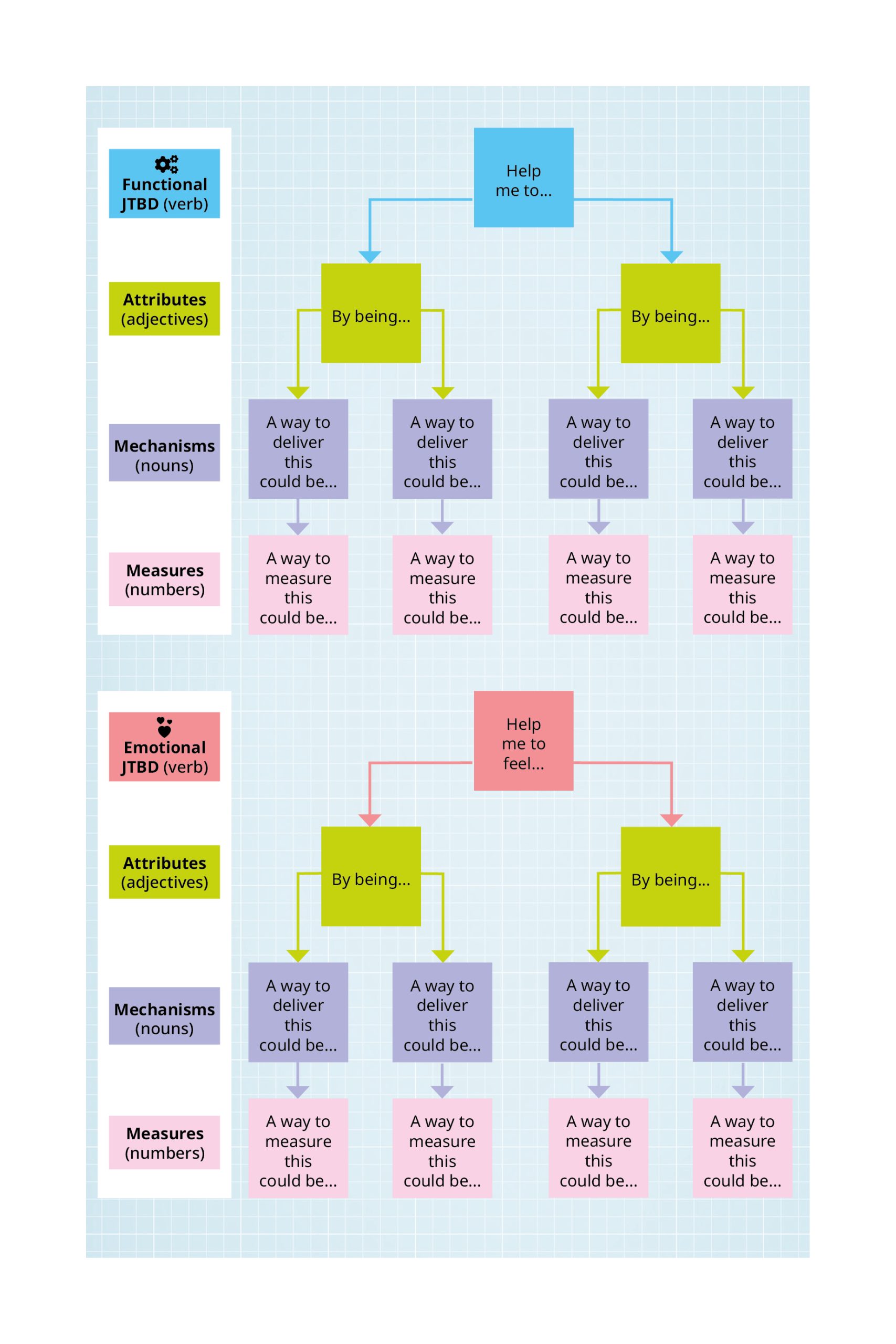
Figure 1: The Untapped Innovation Ideal Product Model (IPM) BlueprintTM at a glance
Because every product mechanism (in purple) can be traced upward to the sensory attributes it influences (in green), and from there to the consumer jobs it supports (in blue and red), reformulation risk can be assessed with genuine precision and, crucially, with a shared language that all functions can contribute to and work from together, rather than each team running its own parallel assessment of what is safe to change.
Isolating what can flex in the formulation, and what cannot
When the Ideal Product Model BlueprintTM is in place, the mechanisms that are most “load-bearing” or strongly connected to critical sensory attributes and high-priority consumer jobs, become immediately visible and clearly worth isolating and protecting. The product mechanisms with weaker or more peripheral connections, those contributing to attributes consumers notice less (or not at all), become the primary targets for cost optimisation. This is where meaningful margin can be recovered, and the Ideal Product Model BlueprintTM provides the shared evidence to pursue it with a strong rationale the whole team, including finance and commercial stakeholders, can stand behind.
Recently, we worked with an R&D team in consumer healthcare who were navigating a significant cost increase in a key raw material used in a leave-on topical format. Before working with the Ideal Product Model BlueprintTM, the instinct across the team was to protect every product mechanism, which is an entirely understandable response when there is no shared framework for distinguishing the elements of the product experience that consumers depend on from those that are incidental to the core job being done. Working through the four layers together, with R&D, sensory science, consumer insights, and marketing, the team identified two mechanisms that were contributing to a skin feel attribute consumers described as pleasant in research, but consistently ranked as lower priority compared to the absorption speed and the lasting comfort that represented the product’s core functional and emotional promise. Removing one mechanism and reducing the other recovered meaningful cost of goods, and the subsequent consumer validation confirmed what the Ideal Product Model BlueprintTM had indicated, with no detectable change in the experience and no erosion of the attributes consumers valued most.
The evidence from analogous development contexts points to how significant this kind of structured approach can be at scale. When Medtronic Xomed implemented lean development principles anchored to validated consumer and clinical requirements, the results included a 57% reduction in rework, a 97% reduction in production lead time, and a 54% decrease in order to shipment lead time. When the whole team works from a shared, consumer anchored framework from the very beginning of a programme, technical effort concentrates on the things that genuinely matter to the end user, and the expensive, often demoralising cycle of late-stage correction becomes far less frequent.
Managing regulatory risk with the same logic
The Ideal Product Model BlueprintTM applies with equal clarity when the driver of change is regulatory rather than economic. When a mechanism must be removed, whether that is a preservative system restricted under evolving EU regulation or a fragrance ingredient flagged under updated safety assessments, the Ideal Product Model BlueprintTM allows teams to model the predicted consumer impact before any reformulation work begins. Laddering upward from the at-risk product mechanism to the sensory attributes it influences, and from there to the consumer jobs those attributes support, makes it possible to assess quickly and with real evidence whether important outcomes are genuinely under threat or whether the change carries considerably less consumer risk than the team initially assumed.
This kind of early visibility matters enormously in commercial terms. Research from the Project Management Institute shows that organisations prioritising early risk identification have a 40% higher project success rate, and the difference between surfacing a regulatory risk early, before technical directions are set and supplier commitments made, and discovering it late in development, when options are fewer and costs are considerably higher, can be the difference between a smooth reformulation and a programme that consumes months of additional resource and still reaches market later than planned.
Where important consumer attributes are genuinely under threat from a regulatory change, the Ideal Product Model BlueprintTM allows alternative mechanisms to be evaluated through the same consumer lens, keeping the evaluation criteria consistent and visible to all functions simultaneously. Rather than running disconnected workstreams with one team exploring ingredient alternatives, another running sensory panels, and a third managing regulatory submissions, the Ideal Product Model BlueprintTM gives everyone the same consistently calibrated map, ensuring that all R&D effort stays oriented toward the same consumer outcome throughout.
The compounding value of a joined-up approach
What we consistently see, once the Ideal Product Model BlueprintTM is embedded in a reformulation process, is that the quality of cross-functional conversation changes quite quickly and quite noticeably. Teams stop debating which function’s view of the product is the correct one, because the consumer understanding at the top of the Ideal Product Model BlueprintTM gives everyone a reference point that sits above functional perspective and is grounded in real evidence rather than assumption or advocacy. Decisions get made faster, the rationale behind them travels more clearly to senior stakeholders, and the consumer outcomes become significantly more predictable.
McKinsey research across more than 300 companies found that organisations prioritising cross-functional, consumer-anchored development achieve 32% higher revenue growth and reach market up to 2 x as fast as their peers. Those are portfolio-level outcomes, and they are built from exactly the kind of programme-level clarity that the Ideal Product Model BlueprintTM is designed to create: a reformulation team that knows precisely what it is protecting, where it has room to move, and how it will know when the consumer experience has been successfully preserved.
In a period where reformulation demands are intensifying and the margin for costly late-stage correction is narrowing, this kind of shared clarity is what allows R&D teams to deliver the right product, at the right cost, without losing what made it worth reformulating in the first place.
If you would like to explore how the Ideal Product Model BlueprintTM could work in your organisation, through a masterclass, a licensing arrangement, or a subscription programme tailored to your team’s needs, we would be delighted to talk. Reach the Untapped Innovation team HERE.
Additional reading:
https://www.just-drinks.com/comment/why-2026-is-a-reset-year-for-the-us-cpg-industry/?cf-view
https://clarkstonconsulting.com/insights/quality-regulations-in-the-beauty-industry/
https://www.personalcareinsights.com/news/clean-beauty-standards-chemforward-report.html