R&D’s Role in ‘theatre’
As FMCG and healthcare giants streamline and refocus, retailers are investing in immersive, experience-led “retail theatre.” But without insight-driven R&D, even the most dazzling store concepts risk becoming generic. This frontline perspective explores how R&D can elevate product stories, shape compelling claims and demos, and partner cross-functionally to turn scientific innovation into shelf-ready, story-led growth that wins consumers and retailers alike. Cover image credit: Manchester Arndale, Space NK
2024–25 had been a difficult year in FMCG and wider healthcare. Many of the companies we all watch closely, Procter & Gamble, Estée Lauder, Unilever, Merck, announced significant job reductions and leaders talk consistently about “streamlining,” “pipeline prioritisation,” and “returning to growth.” These are hard words to hear when we sit in R&D, where we are required to help balance the expectations of both long-term scientific breakthrough, and shorter-term profitable growth.
And yet, while corporate headquarters are slimming down, the frontlines tell a different story. Retailers are pouring energy and investment into new consumer experiences: Sephora doubling down on UK expansion, John Lewis reinventing their beauty halls, Space NK experimenting with dramatically new layouts, and Holland & Barrett creating new wellness hubs. This is compounded by a media shift to “always-on” demonstrated by Unilever shifting half its marketing spend into social media and influencer partnerships, targeting 20 times more influencer relationships than before. The market appetite for a wide range of communication far exceeds the old tool-lit of “concept + 30-second copy + power claim”.
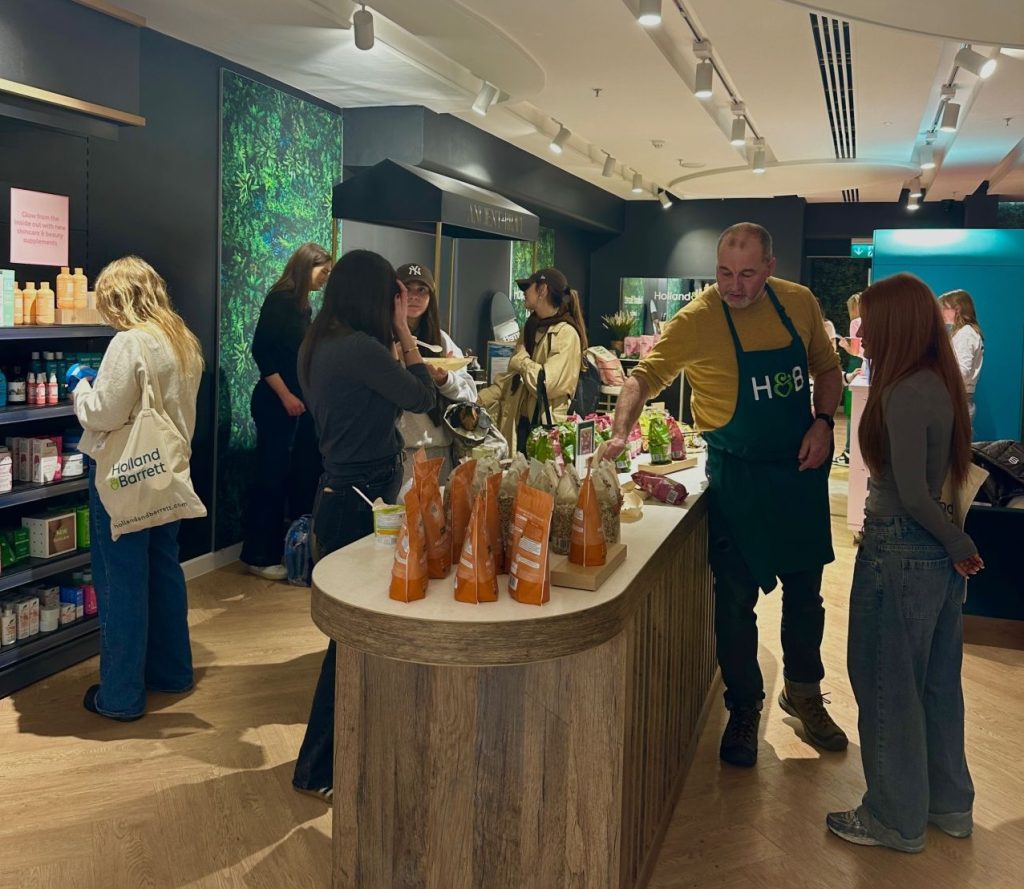
Image credit: Katie Scarlett Kissane, Holland & Barrett
These changes in retail strategy are reflective of consumers who are not simply buying products anymore, they’re buying an opportunity to belong to a wider “tribe”, with fresh expectations of interactive experiences, and an increasing appetite for new knowledge, with more frequent inspiration. The British Beauty Council estimates the UK beauty industry contributed £24.5 billion to the economy in 2023 and supported over half a million jobs. Globally, the consumer healthcare market has grown by ca. 6% CAGR in the past three years, hitting $370 billion in 2023.
Retailers are reading these results and reacting with distinctive planning where stores are presented as product-stages, with shelves positioned as curated experiences to entice shoppers to spend more time exploring new and interesting points of difference. And influencers are part of the full value chain, to the point where they are dramatically shaping emerging consumer needs and expectations.
At first glance, this might feel like Sales and Marketing’s domain only, but without fresh, insight-driven R&D, even the most dazzling retail theatre risks becoming generic, faddy and “me-too” very fast. This is where R&D can add tremendous value, not just as the “white coats” and makers of products at the point of invention, but as co-creators of breakthrough Product Stories that come to life in market.
Image credit: The Ordinary
3 Critical R&D Roles
We believe R&D has three critical roles to play when it comes to helping elevate the shopping experience in-store and online, all of which can sit neatly inside the stage-gate process with tangible KPI’s:
1️⃣ See through the consumer’s eyes. Take pictures and screengrabs of how products, influencers, and store layouts actually look and feel to the shopper. These highly visual representations drive deeper team understanding of the consumer’s world, which then inspires better claims, demos and communication later on.
2️⃣ Shape a fresh product narrative. Go deeper than product features only. Translate unmet user needs into a story where the consumer is the hero. Make the product the supporting character that empowers the target user to achieve new functional and emotional jobs.
3️⃣ Create claims and demos that land in the real world. Consider proof-points, with diverse sets of claims and demos that work in the context of real-world influencer content, or Space NK’s shelves and Holland & Barrett’s hubs, with story-led elements that are interactive, shareable, and shelf-ready.
When R&D teams lean into this commercial partnership with Product Stories and resulting claims and demos, the payoff significantly maximises the technology return on investment. Products don’t just blend into the shelf-space, they stand-out because they are communicating tangible points of difference with real user benefits. This approach wins more new users, helps to re-engage lapsed users, and importantly shows retailers that your brand is bringing a pipeline of fresh energy and empathy to the category.