10 Lessons for R&D Leaders from Holland & Barrett’s Flagship Store: A Masterclass in Integrated Shopper-Product Experiences
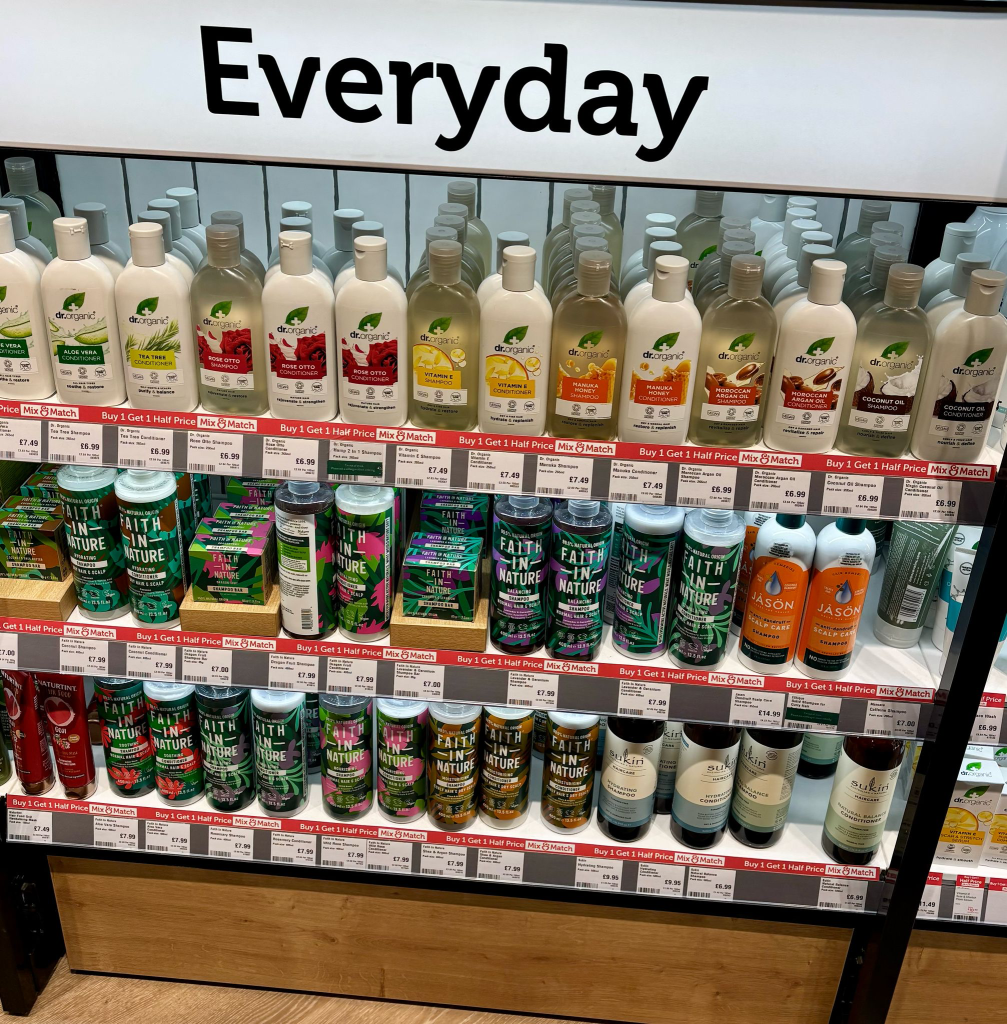
As FMCG R&D leaders seek to develop breakthrough innovations in an increasingly competitive and cost-conscious environment, the latest Holland & Barrett flagship store offers a compelling case study. More than just a retail refresh, this space represents a radical rethinking of how consumers discover, engage with, and trust wellness products. No longer can R&D focus solely on the in-use experience of a product; the moment of discovery is now just as critical. Here are ten strategic lessons designed specifically for R&D leaders who want to be more user-led while managing the realities of innovation speed and cost. Image Credit – Holland & Barrett.
As FMCG R&D leaders seek to develop breakthrough innovations in an increasingly competitive and cost-conscious environment, the latest Holland & Barrett flagship store offers a compelling case study. More than just a retail refresh, this space represents a radical rethinking of how consumers discover, engage with, and trust wellness products. No longer can R&D focus solely on the in-use experience of a product; the moment of discovery is now just as critical.
This transformation is grounded in Holland & Barrett’s broader business strategy. As of 2025, H&B continues to solidify its position as a leading health and wellness retailer in the UK through significant investments in store expansion, product innovation, and a shift towards science-led wellness solutions. In the fiscal year ending September 2023, the company reported an 11% increase in group revenue, reaching £806.1 million. While EBITDA declined to £81.9 million due to accounting changes and strategic investment, growth continued well into 2024, with UK sales rising 11% and international markets surging by 48%.
H&B’s ambitious expansion plan in 2025 includes opening up to 50 new UK stores, building on the 35 new stores and 315 refurbishments completed in 2024. The company is exploring new formats such as concessions in Next stores and travel hubs to enhance accessibility and engagement. Central to this transformation is a commitment to science-backed wellness, including the establishment of a Science and Nutrition Centre of Excellence and a renewed focus on emerging health trends like brain health, metabolism support, and maternal wellness.
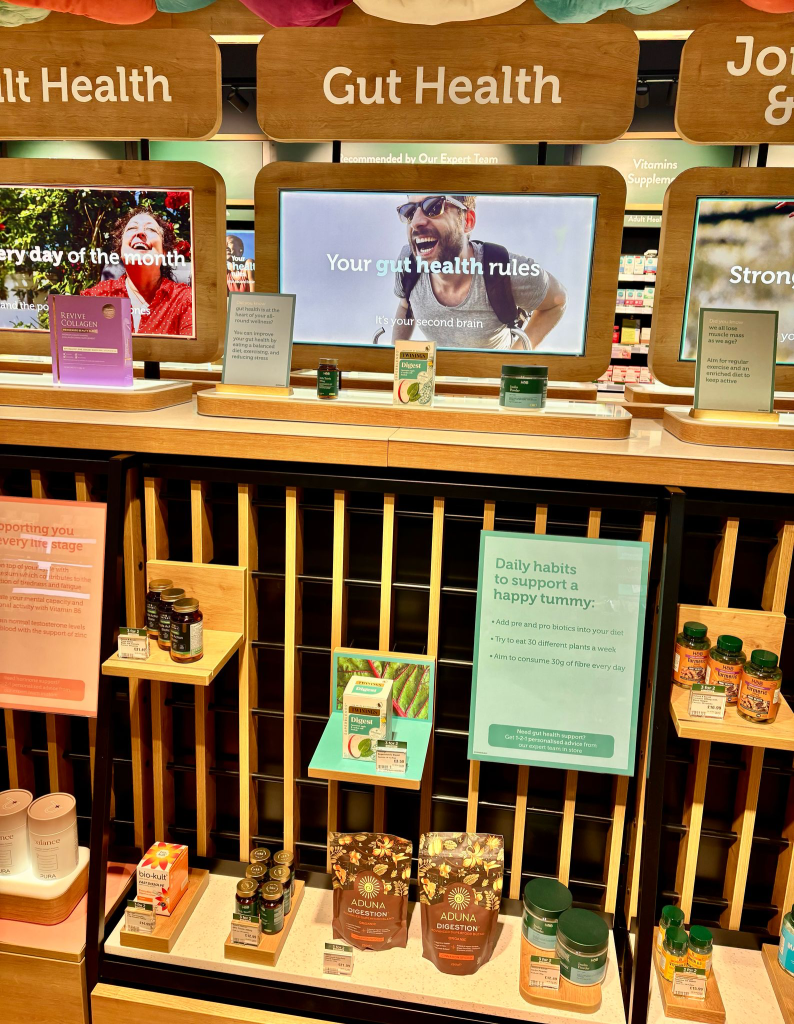
The new flagship store exemplifies this shift. Here are ten strategic lessons designed specifically for R&D leaders who want to be more user-led while managing the realities of innovation speed and cost.
1. Widen the Competitive Lens
Forget rigid product formats. This store reimagines shelving entirely, grouping items by benefit rather than type. Gut-health teas sit beside gut-friendly vitamins and superfood smoothie blends. R&D teams must reframe their understanding of the competitive set not by product format, but by user intent and desired outcome.
2. Design for In-Store Theatre
Not every product lives on a straight shelf, offline or online. H&B feature displays used lighting, materials, and plinths to highlight new launches or trending wellness concerns. For R&D, this means designing products that visually pop in diverse retail contexts and a deep understanding of how structural cues can amplify messaging.
3. Collaborate with In-Store Influencers
The human touch was palpable: knowledgeable staff acted as wellness concierges. Four well-briefed team members aided navigation of everything from supplements to protein drinks. R&D teams could collaborate with retail training and education teams to create product stories and demo materials that these in-store influencers can elevate effectively.

4. Leverage In-Store Media
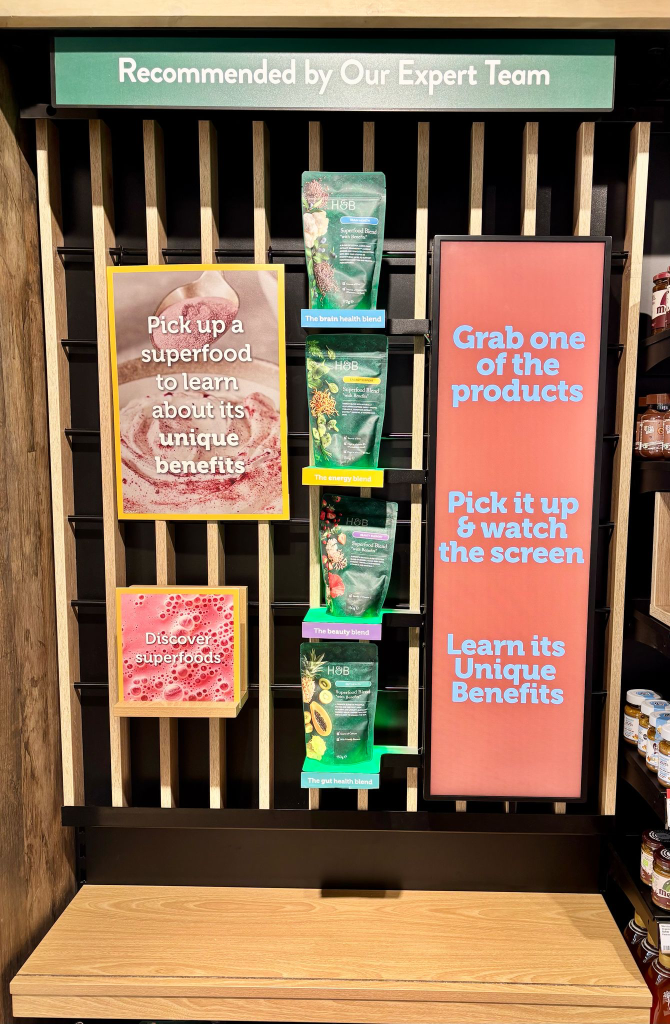
Video screens and visual leaflets provided bite-sized, benefit-led claims and demos. These weren’t compliance-heavy or clinical, they were visually compelling and very intuitive. R&D must develop a sharper ability to distil product benefits in engaging, instantly legible formats that integrate seamlessly with visual merchandising.
5. Track Category Format-Mix Innovation
Ready-to-drink and ready-to-dilute formats are exploding across wellness categories. The shelves were lined with functional waters, health shots, and hybrid drinks. R&D should expand product scouting to multi-format, need-state driven innovation as much as ingredient or benefit innovation.
6. Explore the Interface with Diagnostics
The inclusion of Randox screening services signals a future where wellness retail blurs into diagnostics. R&D teams must explore how product experiences and solutions can align with biomarker-based personalisation.
7. Design for Communities, Not Just Shoppers
Pilates classes were running in-store, hosted by local instructors. This store was not just a shop, it was a hub. R&D should consider how products fit into community-led wellness routines and word of mouth drivers, and design with these broader user-ecosystems in mind.
8. Create Platforms for Education
Author talks, influencer workshops, and nutrition seminars added depth to the store visit. R&D leaders could think of product storytelling as a continuous journey, one that could involve more detailed, face-to-face education and not just packaging or digital copy.
9. Conduct In-Context User Research
This store used warm, human post-shopping surveys with compelling repeat shopping incentives. R&D could potentially explore similar real-time feedback loops that can accelerate product development learning cycles.
10. Involve Store Designers in Product Development
Design agencies like Syn and Barrows helped to create this immersive retail environment. Why not bring similar capabilities into the upstream product development process? R&D teams could involve experiential designers and business sales teams early in the NPD process, ensuring the final product is built for emergent retail contexts in which it will live.
Final Thought:
This Holland & Barrett flagship store offers more than an aesthetic upgrade; it offers a blueprint for future-facing product development. For R&D leaders looking to deliver innovation with speed, relevance, and resonance, it’s a powerful reminder: your product and product stories must be compelling, insightful and intuitive in order to attract and retain the reward of purchase.