Fragrance as a Product: Start with the user
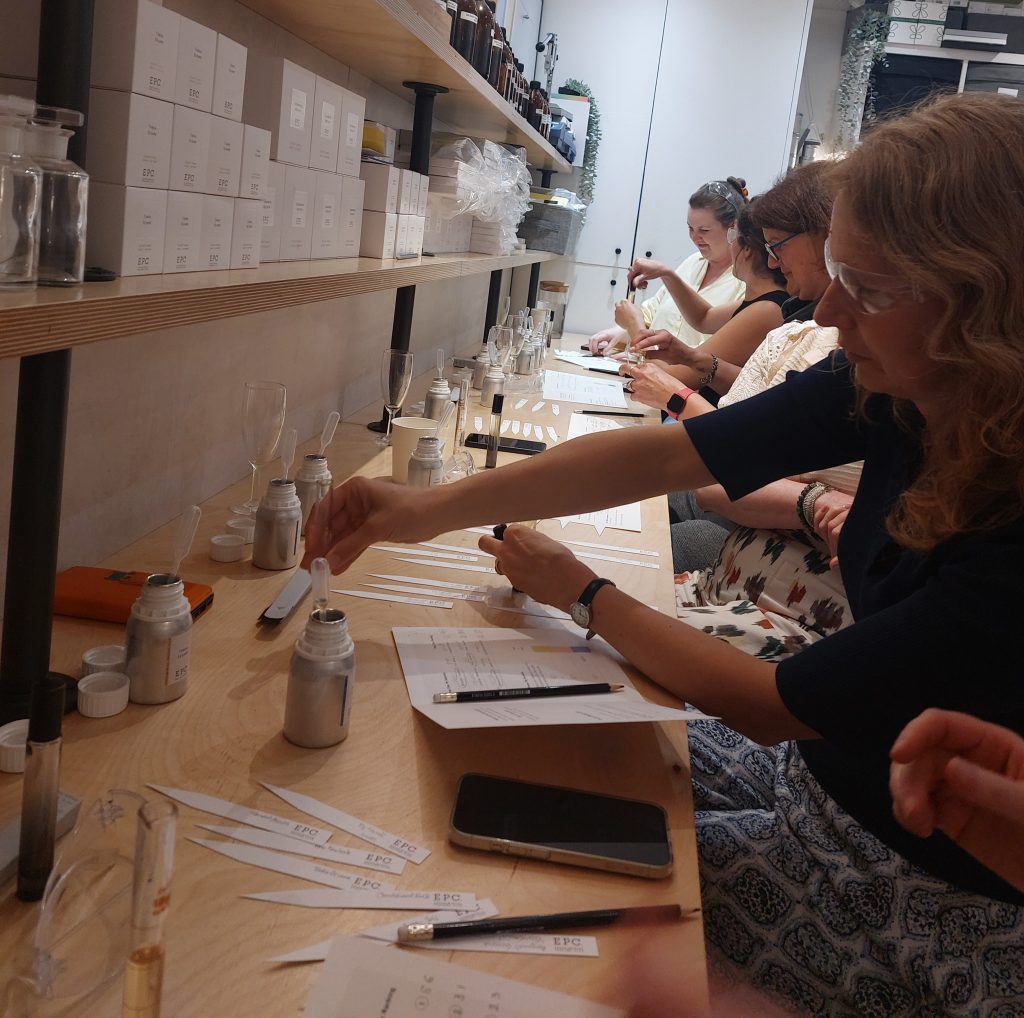
Our team recently stepped into a world of perfumery at the Experimental Perfume Club (EPC), to immerse ourselves in a hands-on innovation experience. It was an exercise in creativity, decision-making and user experience.
Our team recently stepped into a world of perfumery at the Experimental Perfume Club (EPC), to immerse ourselves in a hands-on innovation experience. It was an exercise in creativity, decision-making and user experience.
With just nine oils to choose from, each of us were challenged to create a unique scent that reflected our personal taste. The process had three clear layers:
- Top notes – the first impression, fresh but fleeting.
- Middle notes – the heart, shaping the body of the scent
- Base notes – the lasting memory, grounding the fragrance.
A simple framework with real-time testing.
Take a look at our creations
Each decision we made: balancing freshness with depth, fruity with floral, softness with spice, was a mini product sprint. Fast, intuitive, sensory-driven choices, led by user preference. Though we started with the same nine scents, each blend was unique – we didn’t follow formulas, we responded to what resonated.
Our key takeaways from the experience:
- No single formula – there is no ‘right’ recipe – balance the notes in line with what appeals to you personally.
- Perfume technology = longevity – different nomenclature in the perfumery market is related to how long a scent would be detectable on your skin, depending on it’s oil concentration
- Top notes fade fast – fresh, citrusy scents are made up of top notes that evaporate quickly. If you love these, you’ll need to reapply more often.
- Perfume and age matters – perfume (EDP/EDC) isn’t recommended for under-16s. Lighter alternatives like Eau de Cologne or Eau de Toilette are safer options for younger skin.
- Creating a balanced blend – crafting a well-rounded perfume is all about trial and error. Adjust the percentages of top, middle, and base notes until the scent feels harmonious.
- Nose blindness (anosmia) is real – memory can mute perception of the strength of an oil. Some felt familiar but weak, others felt strong.
- Scent strength matters – fragrance follows a clear hierarchy: Eau de Fraîche (lightest), Eau de Cologne, Eau de Toilette, and Eau de Parfum (strongest).

Overall, the experience at the EPC was a masterclass in how to design learning that sticks. The ‘learn by doing’ approach mirrored our Innovation Gym training structure. The parallels were clear:
- Short and focused sessions, perfectly tuned to modern attention spans.
- Try as you go mindset – learning by doing, with clear exercises, simple tools and real-world case studies on creating a personal fragrance.
- Expert trainers guiding us with live feedback, great storytelling, and engaging examples.
We walked away with a deeper appreciation for the art of perfumery and a reminder of what effective learning design feels like: energising, practical, and immediately applicable. The hands on flow made the experience stick… exactly how we want our Innovation Gym participants to feel.